 |
|
| Back to Home |
|
|
 |
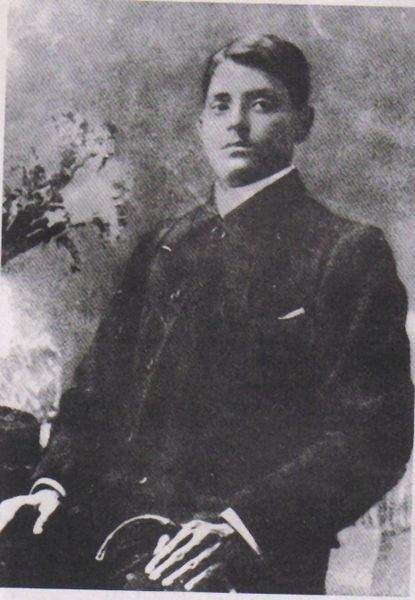
| Bagha Jatin Mukherjee(1879-1915) revolutionary activist. Bagha Jatin's
real name was Jatindra Nath Banerjee. He hailed from Jhenaidha district.
It is said that he came to be called 'Bagha Jatin' after killing a tiger
single-handed and without any arms. He learnt short hand and type writing
after passing the Entrance Examination and was appointed a stenographer
to the government of Bengal. Jatin, a strong and stout young man, proved
his efficiency as a sincere, honest, obedient and diligent employee.
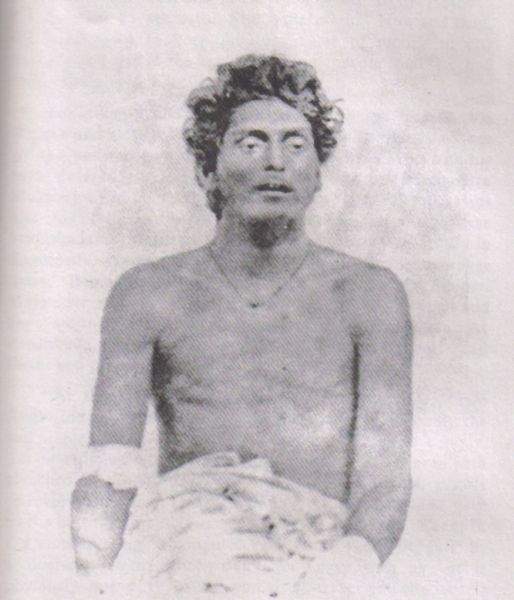
Jatin, a man with a strong sense of self-respect and national pride, came in contact with aurobindo ghosh, and took part in climbing, swimming and shooting in the body building Akhda. While working for the Yugantar, he met Naren (manabendra nath roy) and the two soon gained the confidence of one another. In 1908 Jatin, with some revolutionaries, was implicated in the Alipore Conspiracy Case. In the judgement Barin Ghosh was deported for life, many others were sentenced to various terms and the anushilan samiti was declared illegal and banned. Jatin and Naren, acquitted for want of evidence, went in hiding to Hawra-Shibpur area and continued underground works with other revolutionaries. Jatin was once again arrested in the Hawra-Shibpur Conspiracy Case, and those who were arrested with him were given the common name 'Jatin's gang'. They were so ruthlessly tortured that some of them died and some went insane. Jatin, though acquitted in this case also for want of evidence, was dismissed from service. When in jail, Jatin and Naren made a long term programme to capture power through armed insurrection. They planned to unite different groups of patriots and with this intention Naren travelled extensively all over India as a Sanyasi and organised the revolutionaries in Bengal and elsewhere. The leaders of various groups gathered together on the occasion of relief works during the floods in Hughli and Midnapore. They chose Jatin Mukherjee and Rashbehari Bose as leaders for Bengal and northern India respectively. Attempts were made to organise the Indian revolutionaries outside India also. A Yugantar Ashram was formed at San Francisco and the Shikh community took active part in the struggle for freedom. With the outbreak of the First World War, the Indian revolutionaries of Europe gathered together in Berlin to form the Indian Independence Party and sought German assistance, to which the German government agreed. The Indian Independence Party sent an emissary to Jatin Mukherjee to negotiate with the German Consul General in Calcutta. In the meantime Jatin was made the Commander-in-Chief of the entire revolutionary forces. Naren, leaving Jatin in hiding in Baleswar (Orissa), went to Batavia to negotiate a deal with German authorities there for the shipment of arms and financial help. Police, however, discovered the hideout of Jatin in a paddy field. On 9 September 1915, after heavy exchange of fire, two revolutionaries surrendered. Police found Jatin dead with two others injured. Of the two injured one died later and was identified as Chitta Priya Roy Choudhury of Madaripur.
After passing the Entrance examination in 1895, Jatin joined the Calcutta Central College (now Khudiram Bose College), for his First Arts. Soon he started visiting Swami Vivekananda, whose social thought, and especially his vision of a politically independent India, had a great influence on Jatin. As a mission from the monk, he raised a batch of volunteers to serve the miserable compatriots during famines, epidemics and floods, and running clubs for "man-making" in the context of a nation under foreign domination. He often joined Sister Nivedita, the Swami's Irish disciple, in this venture. In 1899, while working as the Barrister Kennedy's secretary at Muzaffarpur, Jatin realised how urgent it was to have an Indian National Army and to react against the British squandering Indian budget to safeguard their interests in China and elsewhere. In this context one can better appraise why Jatin's exemplary heroism inspired Dr Sarbadhikari's organisation of the Bengal Regiment sent to the Mesopotamian battle-field in 1916.
In 1900, Jatin married Indubala Banerjee of Kumarkhali upazila in Kushtia; they had four children: Atindra (1903–1906), Ashalata (1907–1976), Tejendra (1909–1989), and Birendra (1913–1991). Jatin was alerted and advised to leave his hiding place, but his insistence on taking Niren and Jatish with him delayed his departure by a few hours, by which time a large force of police, headed by top European officers from Calcutta and Balasore, reinforced by the army unit from Chandbali in Mayurbhanj State, had reached the neighbourhood. Jatin and his companions walked through the forests and hills of Mayurbhanj, and after two days reached Balasore Railway Station. The police had announced a reward for the capture of five fleeing "bandits", so the local villagers were also in pursuit. With occasional skirmishes, the revolutionaries, running through jungles and marshy land in torrential rain, finally took up position on September 9, 1915 in an improvised trench in undergrowth on a hillock at Chashakhand in Balasore. Chittapriya and his companions asked Jatin to leave and go to safety while they guarded the rear. Jatin refused to leave them, however. The contingent of Government forces approached them in a pincers movement. A gunfight ensued, lasting seventy-five minutes, between the five revolutionaries armed with Mauser pistols and a large number of police and army armed with modern rifles. It ended with an unrecorded number of casualties on the Government side; on the revolutionary side, Chittapriya Ray Chaudhuri died, Jatin and Jatish were seriously wounded, and Manoranjan Sengupta and Niren were captured after their ammunition ran out. Jatin died in Balasore hospital on 10 September 1915.
|
| Back to Home |
 |
Welcome
to
Rajesh Chopra's Guest Book and comments Please |
 |
 |
 |
 |