Kerala India |

Dedicated site of Goa |

click for Other Tourist Place |
|
Kerala India |
Dedicated site of Goa |
click for Other Tourist Place |
|
|
|
|
|
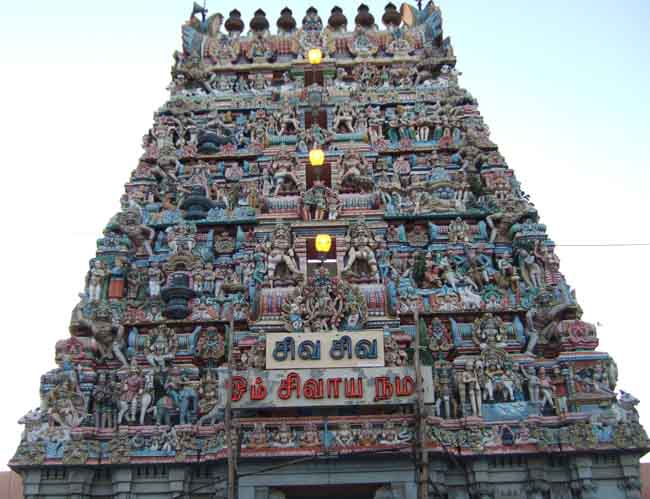
Traditional Hindu temples in Kerala are simple structures made of wood, brick and laterite stone. Often, from afar, the only sign that marks the presence of old temples is a tall, ceremonial flag-mast. The main sanctum hosting the deities -the Sreekovil - is invariably a single storied building of a circular or square plan. Inside the temples, use of oil lamps in contrast to electrical lights lends an air of serenity and mysticism. Walls of the Sreekovil are rarely left bare, and are instead, covered with intricate, beautiful mural paintings or wood carvings. The building base is usually of granite and the walls are of laterite stone masonry covered with lime plaster. The inner framework is of wood. This timber framework supports a conical or pyramidal roof covered with copper tiles. These sloping-roof buildings cope very well with the torrential rains that are a hallmark of Kerala's climate. Evolution of temples in Kerala is closely linked to her social and cultural history.
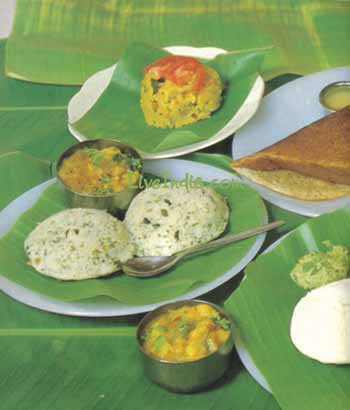 In the Kerala kitchens, be it of any of the various communities living there, simple methods and the locally available foodstuff are used to dish out mouthwatering delicacies. Even the ordinary tapioca root, for example, becomes a main course when boiled and sautéed with coconut and spices, a snack when sliced fine, salted and fried, and a sweet dish when steamed with coconut and jaggery.
|
|
|
|
|
|
 |
 |
 |
 |

A Tribute to Beauty The Taj Mahal with Gallery |
|
|
Dedicated site of Goa |
Temples of Love Khajuraho with Gallery |

Kailash Mansarover Shiva Complete Yatra (Virtual Tour |
 |

Maa Ganges Gomukh to Ganga Sagar Virtual Tour with all Details |
Delhi RED FORT with Gallery |

 |
|
( The Trade Marks Act, 1999, No. 01403083. User Since : 01/04/1997 ) 
All rights reserved. No part of this publication and other sites of under liveindia.com may be transmitted or reproduced in any form or by any means without prior permission from the publisher Live India Internet Services or Mr.Rajesh Chopra, L.C.Premium Cables, 1826, Amar Nath 2nd Building, Bhagirath Palace Delhi - 110006, India. Liveworldtours.com, Liveindia.com or Mr.Rajesh Chopra is not responsible for any wrong information under live india's sites, For confirmation of any information it is recommended that you reconfirm it from your end. |
.