 |
 |
|
|
|
|
|
|
|
|
|
|
|
|
|
|
|
|
|
|
|
|
|
|
 |
Rishikesh
|
|||
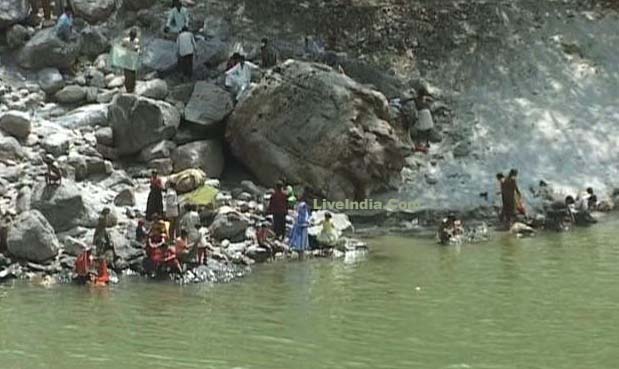
Hrishikesh (from Hrishikesh, another name for Lord Vishnu), in the state of Uttaranchal, is a holy city for Hindus located in the foothills of the Himalaya in northern India. It is also known as the gateway to Himalayas and it located about 25 kilometers away from another holy city, Haridwar, and is considered an access point for the cities that form the Char Dham - Badrinath, Kedarnath, Gangotri, and Yamunotri. |
|||
|
|||
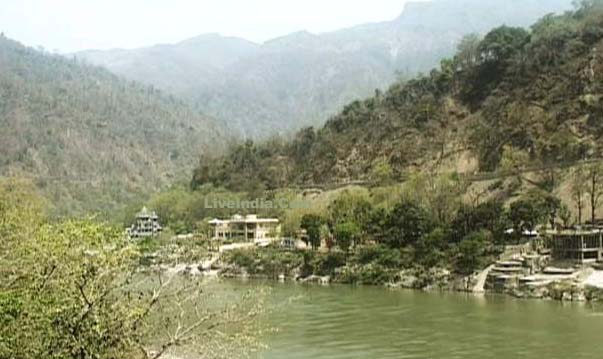
The sacred river Ganga (anglicized to Ganges) flows through Hrishikesh. In fact, it is here that the river leaves the Shivalik mountains Himalayas, and flows out into the plains of northern India. Several temples, ancient as well as new, can be found along the banks of the river in Hrishikesh. The city attracts thousands of pilgrims and tourists each year, from within India, as well as from other countries. The city has several Yoga centres that also attract tourists. It is believed that meditation in Hrishikesh brings one closer to attainment of salvation, or moksha, as does a dip in the holy river that flows through it. It is also becoming a hot spot for white water rafting enthusiasts, both from India and abroad, as it offers medium to rough rapids in the course of river Ganges. |
|||
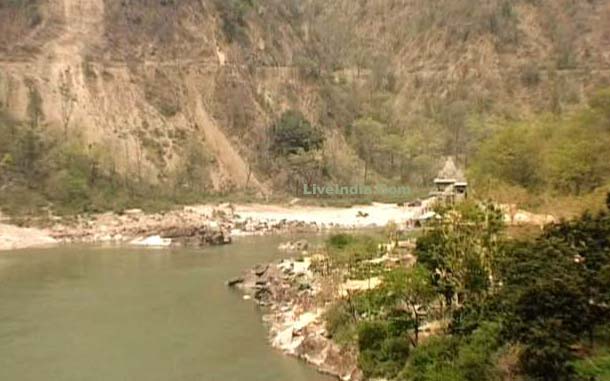
The name Hrishikesh is loosely applied to an association of five distinct sections encompassing not only the town but also hamlets and settlements on both sides of the river Ganges. These include Hrishikesh itself, the commercial and communication hub; the sprawling suburban Muni-ki-Reti or the "sands of the sages"; Shivananda Nagar the home of Sivananda Ashram and The Divine Life Society founded by Swami Sivananda , north of Hrishikesh; the temple section of Lakshman Jhulla, a little further north; and the assorted Ashrams around Swarg Ashram on the East bank. One can reach the famous Neelakanta Maha Deva Temple from here.The Ganga Arathi performed at dusk at the Triveni Ghat is a spectacular sight not to be missed by visitors. |
|||
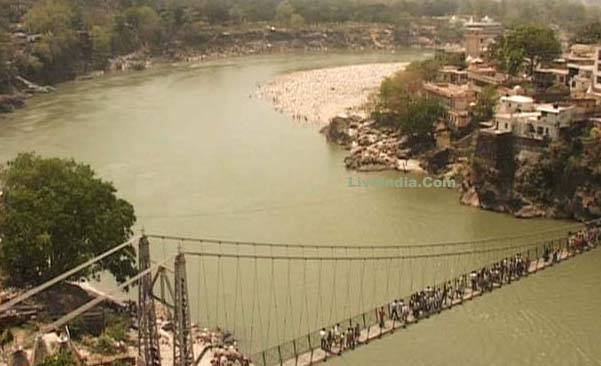
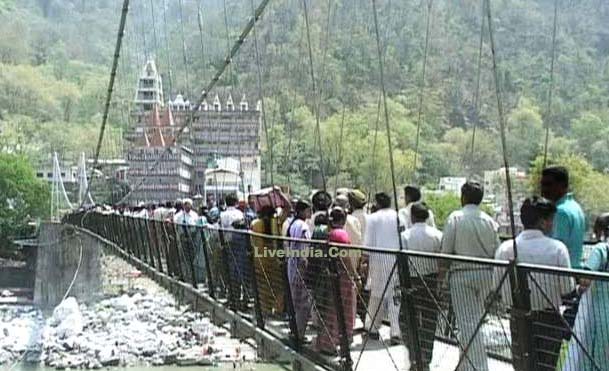
The Lakshman Jhula, a 450 feet long suspension bridge was built in 1939. A newer bridge the Ram Jhula has been added recently. The Ganga abounds in fish. Offerings of puffed rice are made to these creatures. The freshness of the air, and sound of flowing water, the scenic beauty of the region and the distant sound of bell chimes create an unforgettable experience for those that visit this ancient pilgrimage town. |
|||
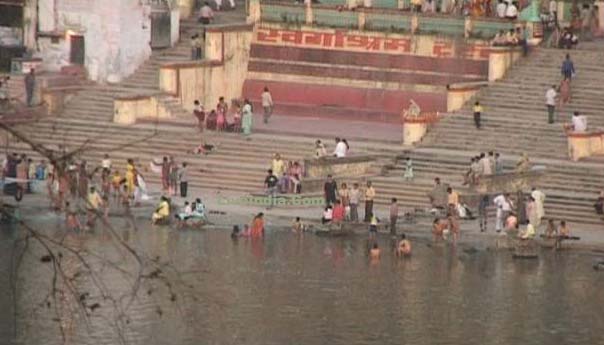
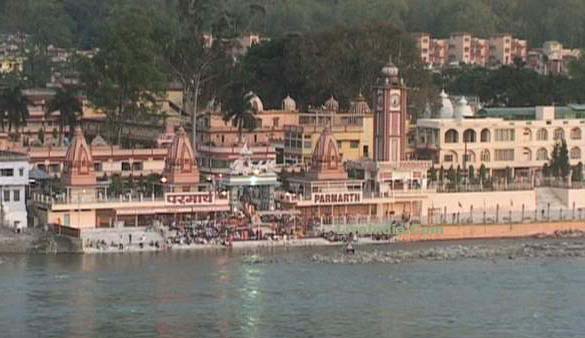
Tapovan on the other bank of the Ganges houses a temple to Lakshmana. It is believed that Lakshmana carried out penances here. It is also believed that his brother Bharata meditated here, and there is a temple to Bharata here. Also seen here are the Swargashram and the Geeta Bhavan temples. |
|||
12 km away from Rishikesh is located the Nilkanth Mahadeo temple at a height of about 5000 feet, commanding spectacular views of the region. Rishikesh represents the Gateway to the Himalayas in the Tehri-Garhwal region of Uttar Pradesh. It abounds in natural splendour. The spectacle of the Ganga rushing through the Himalayan foothills is an awesome sight. Several temples dot the banks of the Ganga at Rishikesh. Rishikesh is located at a height of about 1360 feet above sea level. It is believed that several yogis and sages lived and practised penance here. Rishikesh represents the site where Vishnu vanquished the demon Madhu. |
|||
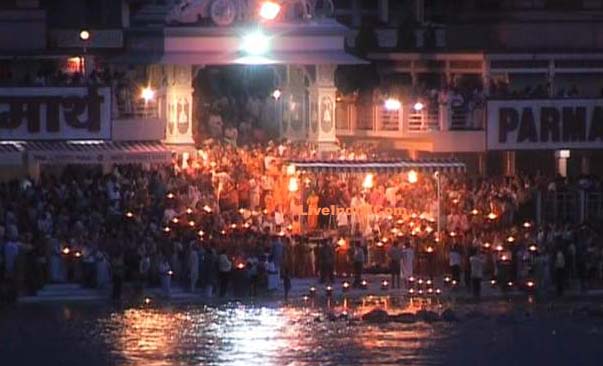
24 kms upstream on the banks of the Ganga where it is met by the Chandrabhaga is the holy town of Rishikesh. Literally, Rishi’s (holy man) locks, this small town is the point where the holy Ganges crashes down in full glory onto huge boulders and creates long stretches of white sandy beaches. the Ganga cuts its passage through the last foothills and enters a complex of three localities. First is the area where the famous Laxman Jhoola bridge spans the river and lends its name to the locality, then comes Muni-ki-Reti (sands of the sages) where the wise ones spent time in devotion, meditation and yoga, and then comes the expending township on the bank of the river. The whole complex is called Rishikesh. Pilgrims flock to this gorge-centred town, 40 km from Dehra Dun. Ashrams, or religious retreat centres, offer lessons in meditation, and treatment for a variety of stress-induced ailments using the ancient medical techniques. Rishikesh is also the gateway and the start – off point for journeys to important religious places like Badrinath, Kedarnath, Gangotri and Yamnotri. Rishikesh is also acquiring greater significance as a centre for white water rafting. Other riverine sports, a base for treks and hikes in the beautiful Garhwal Himalayas and trips to the Sikh Gurdwara at Hemkund Sahib and the Valley of Flowers. One also starts from Rishikesh for skiing at Auli and expeditions to the Nanda Devi massif. Rishikesh is the lap of Hindu philosophy and learning, with several ashrams devoted to the understanding and propagation of the faith. Signs of religious rituals can be seen all over Rishikesh – in the numerous temples lining the banks of the Ganga, the mythological tales that you hear about various spots and even the shops that sell books and religious objects. Rishikesh acquired prominence in the west when the Beatles generation was influenced by the foray of their idols into this Hindu spiritual heartland. Because Rishikesh is where the Beatles met Maharishi Mahesh Yogi and began their quest for spiritual salvation. Even today, several foreign travellers besides the steady stream of Indian students visit the ashrams to study Hindu philosophy, yoga and Ayurvedic medicine. Every year in the beginning of February an international Yoga week is organised at Rishikesh by the Department of Tourism. Rishikesh is not only popular for its religious significance, but also as a base for devotees on their journey to the Char Dham Yatra (Tour of Four Pilgrim sites). Rishikesh is equally popular with adventure tourists heading for the tougher trekking trails to be found in the higher Himalayas. |
|
|
|
|
|
|
|
|
|
|
|
|
|
|
|
|
|
|
|
|
|
|
|
|
|
 |
|
( The Trade Marks Act, 1999, No. 01403083. User Since : 01/04/1997 ) 
All rights reserved. No part of this publication and other sites of under liveindia.com may be transmitted or reproduced in any form or by any means without prior permission from the publisher Live India Internet Services or Mr.Rajesh Chopra, L.C.Premium Cables, 1826, Amar Nath 2nd Building, Bhagirath Palace Delhi - 110006, India. Liveindia.com or Mr.Rajesh Chopra is not responsible for any wrong information under live india's sites, For confirmation of any information it is recommended that you reconfirm it from your end. |
 |
 |
 |
 |
 |
 |
 |
 |
 |
 |
 |